
Neurofeedback for ADHD in Surrey, BC
Neurofeedback for ADHD is a non-invasive brain training approach that may support focus, attention, emotional regulation, and nervous system flexibility. At Sojourn Counselling and Neurofeedback in Surrey, BC, we offer neurofeedback for children, teens, and adults who are looking for additional support with ADHD-related challenges such as distractibility, overwhelm, impulsivity, school struggles, task initiation, and difficulty settling.
Neurofeedback support for ADHD-related focus, overwhelm, and self-regulation
ADHD can affect much more than attention. For some people, it shows up as difficulty focusing at school or work. For others, it looks like emotional outbursts, procrastination, forgetfulness, disorganization, sensory overload, racing thoughts, or feeling constantly behind. Children with ADHD may struggle with homework, transitions, classroom focus, impulsivity, or big emotional reactions. Teens and adults may experience chronic overwhelm, burnout, relationship strain, difficulty following through, or shame about not being able to do what they “know” they need to do.
At Sojourn Counselling and Neurofeedback, we offer neurofeedback as a supportive, non-invasive option for people who want to help their brain and nervous system become more flexible and regulated. Rather than relying only on talk-based strategies, neurofeedback provides the brain with real-time information about its own activity. This feedback may help support greater self-regulation, attention, and resilience over time.
Neurofeedback is not a cure for ADHD, and it does not replace medical care, assessment, medication, ADHD counselling, school supports, or ADHD coaching. Instead, many clients consider it as one part of a broader support plan. For some clients, ADHD-related challenges may also overlap with anxiety, sleep difficulty, emotional overwhelm, or stress sensitivity. In those situations, clients may also want to learn more about neurofeedback for anxiety and nervous system regulation.

For children, teens, and adults in Surrey, Cloverdale, Langley, South Surrey, White Rock, and the surrounding Fraser Valley, neurofeedback may be worth exploring when ADHD-related focus, emotional regulation, and nervous system overwhelm are affecting daily life.
What is neurofeedback for ADHD?

Neurofeedback for ADHD is often described as a form of brain training. It uses feedback from the brain’s own activity to help the central nervous system notice patterns and adjust in real time. For people with ADHD-related challenges, this may be helpful because attention, focus, impulsivity, emotional regulation, sleep, and executive functioning are all connected to how flexibly the brain and nervous system respond to everyday demands.
At Sojourn Counselling and Neurofeedback, we primarily use NeurOptimal® neurofeedback, a dynamic form of neurofeedback therapy. During a session, sensors are placed on the scalp and ears while the client listens to music or watches a video. When the system detects changes in brain activity, there is a brief interruption in the audio. This feedback gives the brain information about what it is doing, allowing it the opportunity to reorganize without conscious effort from the client.
This can be especially appealing for children, teens, and adults who find traditional strategies difficult to maintain. Many people with ADHD already “know” what they are supposed to do, but still struggle to start tasks, stay organized, manage transitions, regulate emotions, or follow through consistently. Neurofeedback does not require the client to talk through every difficulty, concentrate perfectly, or perform a mental exercise correctly. Instead, the process is passive, non-invasive, and designed to support the brain’s own capacity for flexibility and self-regulation.
Neurofeedback is not the same as an ADHD assessment, diagnosis, medication, tutoring, counselling, or ADHD coaching. It does not teach planning skills directly or replace medical care. Instead, it may be considered as one supportive part of a broader care plan for ADHD-related attention, regulation, and nervous system challenges. Some clients use neurofeedback alongside counselling, school supports, medication, coaching, or parent support. Others explore it when they are looking for a non-medication support that may help with focus, overwhelm, emotional reactivity, or difficulty settling.
ADHD is more than being distracted
Many people think of ADHD as a problem with paying attention, but ADHD often affects much more than focus. It can influence how a person starts tasks, manages time, shifts between activities, regulates emotions, handles frustration, organizes daily life, and recovers from stress. For some children, teens, and adults, ADHD can feel less like a simple attention problem and more like a nervous system that has difficulty finding a steady rhythm.
Focus, attention, and distractibility
ADHD-related attention challenges can look different from person to person. Some people are easily distracted by sounds, movement, thoughts, or screens. Others can focus intensely on something interesting but struggle to stay with tasks that feel boring, repetitive, or overwhelming. A child may be able to focus on a preferred activity but find homework or classroom tasks almost impossible to sustain. An adult may sit down to work, only to lose track of time, switch between tasks, or feel mentally scattered before anything is finished.
Executive function and follow through
For many people, ADHD also affects emotional regulation. Children may have big reactions to small frustrations, difficulty with transitions, or emotional outbursts that seem to come on quickly. Teens may feel easily overwhelmed by school demands, social pressure, sensory input, or expectations for independence. Adults may experience irritability, rejection sensitivity, burnout, anxiety, or shame when they cannot keep up with the pace of daily life. These emotional patterns are not simply behaviour problems; they are often connected to how the brain and nervous system respond under stress.
Nervous system overload and difficulty settling
Some people with ADHD describe feeling constantly “on,” restless, overstimulated, or unable to fully relax. Others feel mentally foggy, shut down, or exhausted after trying to manage focus and responsibilities all day. Sleep difficulty, racing thoughts, sensory sensitivity, and stress overload can also be part of the picture. This is one reason some individuals and families explore neurofeedback: not only for attention, but also for support with self-regulation, flexibility, and the brain’s ability to settle after stress.
Who may consider neurofeedback for ADHD?
Neurofeedback may be considered by children, teens, and adults who are looking for additional support with ADHD-related focus, emotional regulation, executive functioning, and nervous system overwhelm. Because ADHD can look different across age groups, the reasons for exploring neurofeedback often vary. Some families are looking for help with school struggles, impulsivity, homework battles, or emotional outbursts. Some teens are trying to manage pressure, distraction, motivation, sleep, and overwhelm. Some adults are looking for support with procrastination, burnout, disorganization, work demands, parenting stress, or the emotional weight of living with ADHD for many years.
Neurofeedback may be considered by children, teens, and adults who are looking for additional support with ADHD-related focus, emotional regulation, executive functioning, and nervous system overwhelm. Because ADHD can look different across age groups, the reasons for exploring neurofeedback often vary. Some families are looking for help with school struggles, impulsivity, homework battles, or emotional outbursts. Some teens are trying to manage pressure, distraction, motivation, sleep, and overwhelm. Some adults are looking for support with procrastination, burnout, disorganization, work demands, parenting stress, or the emotional weight of living with ADHD for many years.
Neurofeedback for children with ADHD
Parents often begin looking for ADHD support when daily routines become difficult to manage. A child may struggle to focus in class, sit still, complete homework, follow instructions, manage transitions, or recover after frustration. At home, this can lead to repeated reminders, emotional meltdowns, conflict around schoolwork, difficulty getting ready, or a sense that the whole family system is organized around helping one child get through the day.
For children with ADHD-related challenges, neurofeedback may be explored as a non-invasive support for attention, self-regulation, and nervous system flexibility. Because NeurOptimal® neurofeedback does not require a child to talk through every difficulty or complete a structured mental task, some families find it approachable when traditional strategies feel hard to sustain. Neurofeedback can also fit alongside counselling, school-based supports, parenting strategies, medical care, or other forms of help already in place.
Neurofeedback for teens with ADHD
Teenagers with ADHD may face a different set of pressures. As school demands increase, they are often expected to manage deadlines, organize assignments, regulate screen use, plan ahead, communicate clearly, and become more independent. For a teen with ADHD, these expectations can quickly become overwhelming. They may appear unmotivated, avoidant, irritable, distracted, or disengaged, even when they are internally stressed or discouraged.
Neurofeedback may be considered for teens who struggle with focus, emotional regulation, stress sensitivity, sleep difficulty, or feeling mentally overloaded. It may be especially relevant when ADHD overlaps with anxiety, school stress, low confidence, or difficulty settling after a demanding day. For some teens, neurofeedback provides a quiet, low-pressure form of support that does not require them to explain everything verbally before receiving help.
Neurofeedback for adults with ADHD
Adults with ADHD often search for help after years of trying to compensate. They may be managing work, parenting, relationships, finances, household responsibilities, and constant mental load while feeling chronically behind. Adult ADHD can show up as procrastination, disorganization, time blindness, unfinished projects, emotional reactivity, burnout, difficulty relaxing, or a cycle of working intensely and then crashing.
For adults, neurofeedback may be explored as part of a broader plan to support focus, self-regulation, nervous system recovery, and emotional steadiness. It does not replace counselling, ADHD coaching, medical care, or practical strategies for executive functioning. However, for adults who feel stuck in cycles of overwhelm, distraction, stress, or shutdown, neurofeedback may offer another way to support the brain’s capacity to notice, adjust, and become more flexible over time.
Can neurofeedback help with ADHD symptoms?
Many people explore neurofeedback for ADHD because they are looking for support with focus, attention, impulsivity, emotional regulation, and executive functioning. For some clients, the goal is not only to “pay attention better,” but to feel less overwhelmed, recover more easily from stress, and have a nervous system that can shift more flexibly between activity, rest, focus, and connection.
Research on neurofeedback for ADHD is mixed, and it is important to approach it with realistic expectations. Some studies and clinical reports suggest that neurofeedback may help some people with attention and self-regulation, while other reviews have questioned whether neurofeedback produces reliable ADHD symptom improvement when used as a stand-alone treatment. For this reason, Sojourn Counselling and Neurofeedback presents neurofeedback as a supportive, non-invasive option that may be considered as part of a broader ADHD care plan, not as a guaranteed cure or replacement for medical care.
For children and teens, neurofeedback may be explored when ADHD-related challenges are affecting school, homework, emotional regulation, family routines, sleep, or confidence. For adults, it may be considered when attention problems, procrastination, disorganization, stress overload, emotional reactivity, or burnout are making daily life harder to manage. In each case, the focus is on supporting the brain and nervous system’s capacity for flexibility, awareness, and regulation over time.
Because ADHD often involves more than one area of life, neurofeedback may work best when it is part of a larger support system. This may include counselling, school accommodations, parent support, ADHD coaching, medical care, medication when appropriate, sleep support, movement, and practical strategies for organization and follow-through. Our broader neurofeedback therapy approach is designed to fit alongside these supports rather than replace them.
At Sojourn Counselling and Neurofeedback, we encourage clients and families to think of neurofeedback as one possible tool for supporting self-regulation. It may be especially worth exploring when ADHD-related focus, overwhelm, and emotional intensity are affecting daily life and when you are looking for a gentle, non-invasive option that does not require constant talking, performance, or effort during the session itself.
How NeurOptimal® neurofeedback works at Sojourn
At Sojourn Counselling and Neurofeedback, we primarily use NeurOptimal® neurofeedback, a dynamic form of neurofeedback that is designed to give the brain information about its own activity in real time. During a session, small sensors are placed on the scalp and ears while the client relaxes, listens to music, or watches a video. The sensors do not put anything into the brain. They simply read changes in electrical activity and allow the system to provide feedback through brief pauses in the audio.
These brief interruptions act like a signal to the brain that something has shifted. The client does not need to concentrate, answer questions, complete exercises, or try to make the brain do something specific. Instead, the brain receives information and has the opportunity to notice, adjust, and reorganize on its own. For people with ADHD-related challenges, this low-effort process can be appealing because it does not depend on willpower, verbal processing, or the ability to stay focused throughout the session.
NeurOptimal® is different from some forms of traditional neurofeedback that use diagnosis-based protocols or train specific brainwave patterns toward a predetermined target. As a dynamic neurofeedback system, NeurOptimal® does not require an ADHD diagnosis, a QEEG brain map, or a fixed training protocol. It is not trying to force the brain into a particular state. Instead, it provides moment-by-moment feedback that may support the nervous system’s natural capacity for flexibility and self-regulation.
This approach fits well for clients who are looking for a gentle, non-invasive form of neurofeedback therapy that can be used alongside other ADHD supports. Children, teens, and adults may use neurofeedback while also receiving counselling, medication support from a physician, school accommodations, ADHD coaching, parenting support, or practical strategies for organization and follow-through.

For some clients, the goals of neurofeedback may include feeling more settled, recovering more easily after stress, improving emotional regulation, supporting attention, or creating more flexibility in daily life. Because each person’s nervous system is different, responses to neurofeedback can vary. Some people notice changes in sleep, calm, focus, or emotional intensity; others experience more gradual shifts over repeated sessions. At Sojourn, we encourage clients to approach neurofeedback with curiosity, realistic expectations, and a broader view of ADHD support.
Neurofeedback, counselling, medication, and ADHD coaching: how do they fit together?
ADHD support is often most effective when it is approached from more than one angle. Neurofeedback can be one part of that support, but it is not the only option and it is not intended to replace medical care, counselling, school accommodations, medication, or practical ADHD strategies. Each type of support addresses a different part of the ADHD experience.
Medication, when appropriate, is typically managed by a physician, nurse practitioner, psychiatrist, or other qualified prescriber. For many people, medication can help reduce core ADHD symptoms such as inattention, impulsivity, and hyperactivity. Neurofeedback should not be used as a reason to start, stop, or change medication without speaking with a qualified medical professional.
ADHD coaching and practical skills support can help with planning, routines, organization, time management, task initiation, and follow-through. These supports can be especially helpful when someone needs external structure, accountability, and step-by-step strategies for daily life. For many children, teens, and adults, these practical tools are an important part of managing school, work, home responsibilities, and relationships.
Counselling can support the emotional and relational impact of ADHD. Many people with ADHD carry years of discouragement, criticism, shame, anxiety, burnout, or relationship strain. Counselling may help clients better understand their patterns, develop self-compassion, strengthen emotional regulation, and work through the stress that can come from feeling misunderstood or constantly behind. When ADHD overlaps with anxiety or nervous system overwhelm, clients may also find it helpful to learn more about neurofeedback for anxiety and regulation-based support.
Neurofeedback approaches ADHD from a different direction. Rather than teaching a strategy or exploring a problem through conversation, neurofeedback gives the brain real-time information about its own activity. The goal is not to force attention or control behaviour, but to support the nervous system’s capacity for flexibility, self-regulation, and recovery from stress. This is why some clients explore neurofeedback when they feel that insight, effort, reminders, or behavioural strategies have not been enough on their own.
At Sojourn Counselling and Neurofeedback, we view neurofeedback as one possible support within a broader care plan. For some clients, that plan may include counselling, school supports, medication, coaching, parenting strategies, or lifestyle changes. For others, neurofeedback may be a starting point when talking feels difficult, emotional overwhelm is high, or the person is looking for a gentle, non-invasive way to support focus and regulation.
Neurofeedback for emotional regulation, overwhelm, and executive function
Many people begin searching for ADHD support because focus is difficult, but the daily impact of ADHD often reaches far beyond attention. Emotional intensity, overwhelm, procrastination, time management struggles, sensory sensitivity, and difficulty recovering after stress can all make life feel harder than it looks from the outside. For children, this may show up as meltdowns, impulsive reactions, homework battles, or difficulty with transitions. For teens and adults, it may look like shutdown, burnout, irritability, avoidance, or the exhausting cycle of trying harder and still falling behind.
Executive functioning is the set of mental skills that helps a person plan, organize, begin tasks, shift attention, remember steps, manage time, and follow through. When these skills are strained, a person with ADHD may know exactly what needs to happen but still feel unable to start, sequence, or complete the task. This can lead to frustration for the individual and confusion for parents, partners, teachers, or employers who may mistake executive function difficulties for laziness, defiance, or lack of motivation.
Neurofeedback does not directly teach organizational strategies or replace practical supports for executive functioning. Instead, it approaches ADHD-related challenges from the perspective of brain and nervous system flexibility. When the nervous system is more regulated, some people find it easier to pause, recover from frustration, shift between activities, tolerate stress, and access the strategies they already know. This is one reason neurofeedback may be considered alongside counselling, ADHD coaching, school supports, parenting strategies, or medical care.
Emotional regulation is another important part of ADHD support. Many children and adults with ADHD experience emotions quickly and intensely. A small frustration can become a big reaction, and once the nervous system is activated, it may be difficult to settle again. At Sojourn Counselling and Neurofeedback, we often think about these patterns through a regulation-based lens rather than simply a behaviour-management lens. The goal is to support the person’s capacity to notice, adjust, recover, and reconnect.
For clients whose ADHD-related overwhelm overlaps with stress, anxiety, or trauma history, additional support may also be helpful. Some people benefit from counselling that addresses anxiety, emotional patterns, family stress, or relationship strain alongside neurofeedback. Clients who are noticing a strong anxiety component may also want to explore our page on anxiety counselling, while those interested in how neurofeedback may support nervous system regulation can learn more through our main neurofeedback page.
In-office neurofeedback and home neurofeedback rentals for ADHD
Some clients prefer to begin neurofeedback in the office, while others are interested in the flexibility of using neurofeedback at home. At Sojourn Counselling and Neurofeedback, we offer both in-office NeurOptimal® neurofeedback sessions in Surrey and a home neurofeedback rental program for individuals and families who want regular access to brain training from home.
In-office neurofeedback may be a good fit if you are new to neurofeedback, want support from a practitioner, or would prefer to experience the process in a calm clinical setting before deciding whether to continue. During an in-office session, the practitioner helps you get set up, explains the process, and supports you in understanding how neurofeedback may fit with your broader ADHD support goals.
Home neurofeedback rentals may be helpful for families or adults who want more frequent access, reduced travel time, or the ability to use neurofeedback within the rhythm of daily life. This can be especially appealing when a child, teen, or adult benefits from consistency, when multiple household members want to use the system, or when scheduling regular in-office appointments is difficult.
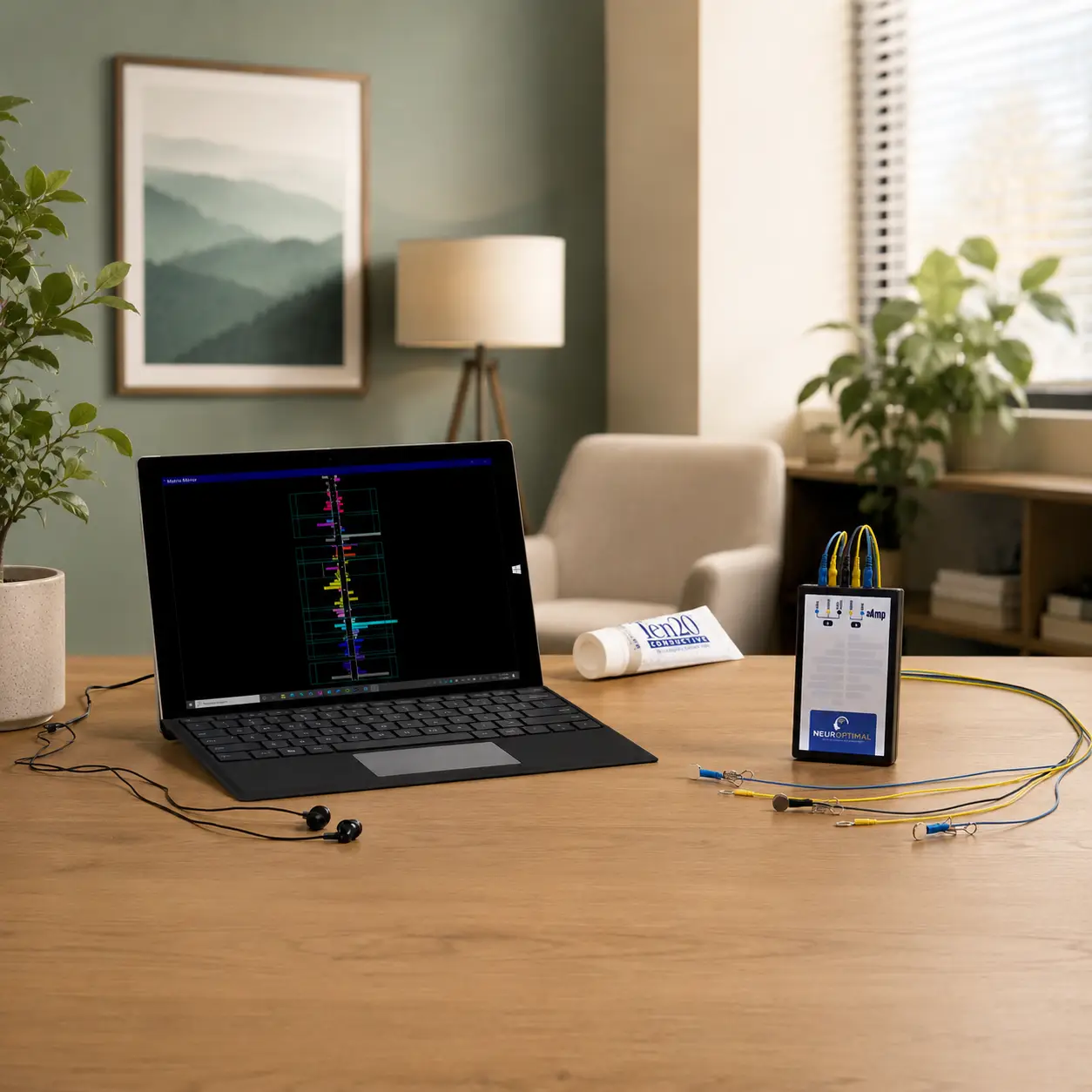
For ADHD-related challenges, home neurofeedback may be considered when the goals include supporting focus, emotional regulation, sleep, stress recovery, nervous system flexibility, or the ability to settle after a demanding day. It may also appeal to parents who are looking for a practical way to support a child at home without adding another highly demanding task to the family schedule.
Neurofeedback rentals are not a replacement for assessment, medical care, school supports, counselling, medication, or ADHD coaching. They are one possible support that can be used alongside a broader care plan. At Sojourn, home rentals include a short in-person demonstration at pickup so clients understand how to use the system. Rental pickup times are arranged by email rather than through online booking.
What to expect at your first neurofeedback appointment
Your first neurofeedback appointment is designed to be comfortable, non-invasive, and easy to begin. You do not need to prepare in a special way, complete a difficult task, or know exactly how neurofeedback works before you arrive. The appointment usually begins with a conversation about what has led you to explore neurofeedback, what ADHD-related challenges are affecting daily life, and what kinds of changes you or your child are hoping to support.
For children and teens, this conversation may include concerns such as school focus, homework struggles, emotional outbursts, transitions, impulsivity, sleep, anxiety, or difficulty settling after stress. For adults, it may include focus problems, procrastination, overwhelm, burnout, emotional reactivity, disorganization, or the experience of feeling constantly behind despite trying hard to keep up.
Once the session begins, small sensors are placed on the scalp and ears. These sensors read changes in brain activity; they do not send electricity into the brain. The client then relaxes while listening to music or watching a video. With NeurOptimal® neurofeedback, brief interruptions in the audio provide feedback to the brain in real time. The client does not need to concentrate, talk through the whole session, or try to make something happen.
Some clients notice shifts in calm, sleep, focus, emotional intensity, or recovery from stress after early sessions, while others experience more gradual changes over time. Responses vary from person to person, and neurofeedback is not presented as a guaranteed ADHD treatment. Instead, we approach it as a supportive process that may help the brain and nervous system become more flexible, regulated, and responsive.
After the session, your practitioner may check in about what you noticed and help you think through next steps. Some clients continue with in-office appointments, while others may consider a home rental if they want more frequent access. Neurofeedback can also be used alongside counselling, medical care, school supports, ADHD coaching, parenting strategies, or other forms of support already in place.
Is neurofeedback for ADHD right for me or my child?
Neurofeedback may be worth exploring if ADHD-related focus, emotional regulation, overwhelm, sleep difficulty, or nervous system stress are affecting daily life. Some families consider neurofeedback when a child is struggling with school focus, homework, transitions, impulsivity, or emotional outbursts. Some teens are looking for support with motivation, stress, confidence, and the pressure of increasing independence. Some adults explore neurofeedback when procrastination, disorganization, burnout, racing thoughts, or emotional reactivity are making it difficult to manage work, relationships, parenting, or daily responsibilities.
Neurofeedback may be a good fit for people who are looking for a gentle, non-invasive support that does not require constant talking or effort during the session. It may also appeal to individuals who feel they already understand many ADHD strategies but still have difficulty accessing those strategies when they are overwhelmed, tired, distracted, or emotionally activated.
At the same time, neurofeedback is not the right fit for every situation. It is not a formal ADHD assessment, diagnosis, cure, or replacement for medical care. It should not be used as a reason to stop or change medication without speaking with a qualified prescriber. It also does not replace counselling, school accommodations, ADHD coaching, parent support, or practical executive functioning strategies when those supports are needed.
Neurofeedback may be most helpful when it is viewed as one part of a broader support plan. For some clients, that plan may include counselling for anxiety, stress, emotional regulation, or self-esteem. For others, it may include medical care, school collaboration, parenting strategies, coaching, sleep support, or a home neurofeedback rental for more regular access. The best approach depends on the person’s age, goals, symptoms, supports, and daily-life challenges.
If you are unsure whether neurofeedback is a good fit, you can begin by booking a neurofeedback appointment and discussing your goals with the practitioner. Together, you can consider whether in-office neurofeedback, home neurofeedback rental, counselling, or another form of support may be the most appropriate next step.
Neurofeedback for ADHD in Surrey, Cloverdale, Langley, and the Fraser Valley
Sojourn Counselling and Neurofeedback is located in Cloverdale, Surrey, and serves clients from across Surrey, Langley, South Surrey, White Rock, and the surrounding Fraser Valley. Many individuals and families looking for neurofeedback for ADHD are searching for support that is close to home, easy to access, and connected to a broader understanding of mental health, emotional regulation, and nervous system care.
For families, location can make a significant difference. Children and teens with ADHD may already be managing school demands, extracurricular activities, homework, emotional overwhelm, and long days of effort. Having access to neurofeedback in Surrey can make it easier to explore support without adding unnecessary travel stress to the week. Parents from Cloverdale, Langley, South Surrey, and nearby communities may also appreciate having both in-office neurofeedback and home rental options available through the same clinic.
Adults with ADHD may also benefit from local access to neurofeedback. Work responsibilities, parenting, commuting, relationships, and daily organization can already place significant demands on the nervous system. For adults looking for ADHD support in Surrey, neurofeedback may be one way to explore focus, regulation, stress recovery, and nervous system flexibility without needing to travel far from home.
Because Sojourn Counselling and Neurofeedback offers both counselling and neurofeedback, clients can consider support from more than one angle. Some people come primarily for neurofeedback. Others may also be interested in counselling for anxiety, stress, burnout, trauma, relationship concerns, parenting challenges, or the emotional impact of living with ADHD. Our clinic’s integrative approach allows clients to consider which supports fit their goals, preferences, and stage of life.
If you are looking for neurofeedback for ADHD in Surrey, Cloverdale, Langley, South Surrey, White Rock, or the Fraser Valley, Sojourn Counselling and Neurofeedback offers a calm, supportive place to begin exploring whether neurofeedback is a good fit for you or your child.
Frequently asked questions about neurofeedback for ADHD
Many people have questions about how neurofeedback fits with ADHD support, especially when they are considering it for a child, teen, or adult who struggles with focus, emotional regulation, overwhelm, or executive functioning. The answers below are intended to help you understand neurofeedback as one possible support within a broader care plan.
Does neurofeedback help ADHD?
Neurofeedback may support focus, attention, emotional regulation, and nervous system flexibility for some people with ADHD-related challenges. Research on neurofeedback for ADHD is mixed, so it should be understood as a supportive option rather than a guaranteed treatment or cure. At Sojourn Counselling and Neurofeedback, we present neurofeedback as one possible part of a broader ADHD support plan.
Is neurofeedback safe for children with ADHD?
Neurofeedback is non-invasive and does not send electricity into the brain. During a NeurOptimal® session, sensors read changes in brain activity while the client listens to music or watches a video. As with any support, it is important to consider the child’s needs, comfort, and broader care plan.
Can neurofeedback replace ADHD medication?
No. Neurofeedback should not be used as a replacement for ADHD medication or medical care. Decisions about starting, stopping, or changing medication should always be made with a qualified medical professional. Neurofeedback may be used alongside medication when appropriate, but it should not replace medical guidance.
Do I need an ADHD diagnosis to try neurofeedback?
No. An ADHD diagnosis is not required to explore NeurOptimal® neurofeedback at Sojourn Counselling and Neurofeedback. However, neurofeedback does not provide an ADHD assessment or diagnosis. If you or your child needs a formal ADHD diagnosis, that should be completed by an appropriately qualified professional.
How many neurofeedback sessions are needed for ADHD?
The number of sessions varies from person to person. Some clients notice changes in sleep, calm, focus, or emotional regulation earlier in the process, while others experience more gradual shifts over repeated sessions. Your practitioner can help you consider what makes sense based on your goals, response, and whether you are using in-office neurofeedback or a home neurofeedback rental.
Is NeurOptimal® the same as traditional ADHD neurofeedback?
No. NeurOptimal® is a dynamic neurofeedback system. Unlike some traditional neurofeedback approaches, it does not use diagnosis-specific protocols or train the brain toward a fixed target. Instead, it provides real-time feedback that may support the nervous system’s natural capacity for flexibility and self-regulation.
Can adults with ADHD use neurofeedback?
Yes. Adults may explore neurofeedback for ADHD-related focus problems, procrastination, overwhelm, emotional reactivity, burnout, sleep difficulty, or difficulty settling after stress. It may be used alongside counselling, coaching, medical care, medication, or practical executive functioning strategies.
Can neurofeedback help with ADHD and anxiety?
Some people with ADHD also experience anxiety, racing thoughts, stress sensitivity, or difficulty settling. Neurofeedback may be considered as one support for nervous system regulation, and some clients may also benefit from counselling or other anxiety-focused support. You can also learn more about neurofeedback for anxiety if anxiety and nervous system overwhelm are part of the picture.
Do you offer home neurofeedback rentals for ADHD?
Yes. Sojourn Counselling and Neurofeedback offers home neurofeedback rentals for individuals and families who want regular access to NeurOptimal® neurofeedback from home. Rentals include a short in-person demonstration at pickup, and pickup times are arranged by email.
Funding Options for Parents of Autistic Children
If your child is autistic, BC’s Autism Funding Program provides up to $22,000 per year for children under 6 and up to $6,000 per year for ages 6 to 18. Counselling for your child and family is a named eligible expense, and many of our families have also successfully received funding for neurofeedback — our guide explains how to make that request, with sample wording you can adapt. Read our parent’s guide to autism funding in BC.